
Jungian Sandplay Therapy
Sometimes experiences cannot be fully expressed in words.
People may find themselves carrying emotions, memories, conflicts, or questions that feel difficult to articulate. At other times, they may understand what is troubling them intellectually yet still feel disconnected from a deeper emotional experience.
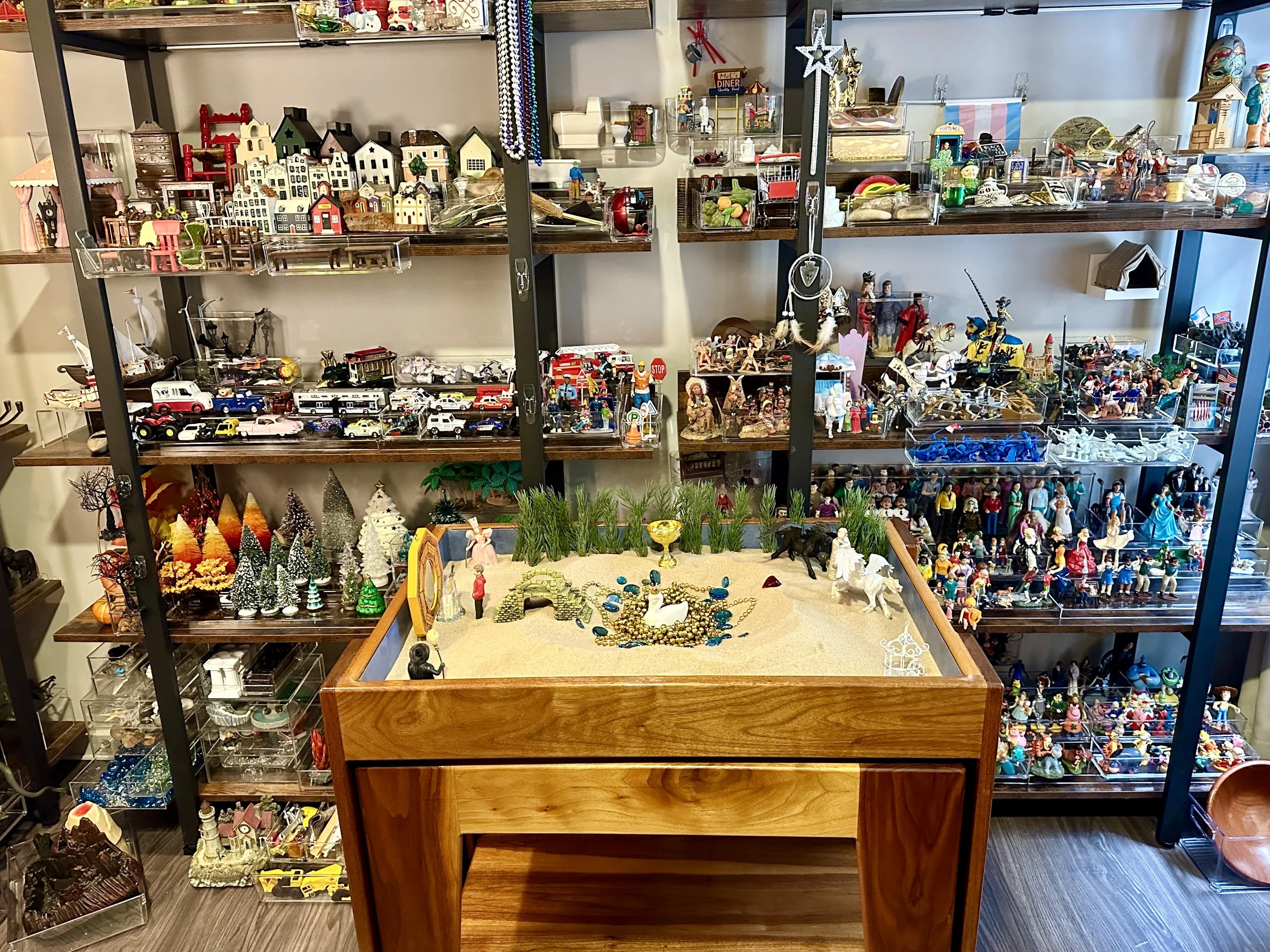
Sandplay therapy offers a unique way of exploring the unconscious beyond conversation alone. Using a tray of sand and a carefully curated collection of miniature figures, individuals create a sand picture that expresses aspects of their inner world symbolically.
Grounded in Jungian psychology, a sandplay process provides a protected space where unconscious material can emerge naturally and be explored with curiosity, reflection, and care.
A Place Where the Unconscious Can Speak
Many forms of therapy rely primarily on words alone. Sandplay engages the psyche through image, symbol, and creative expression, allowing experiences that may be difficult to verbalize to take shape in a sand tray.
Dora Kalff, a Swiss therapist and student of C.G. Jung, developed Jungian sandplay therapy. Kalff described the sandplay process as creating a "free and protected space" in which deeper layers of the psyche can emerge without pressure or premature interpretation.
Within this protective space, individuals often discover new perspectives, emotional insights, and connections that were previously outside conscious awareness. These insights may emerge in the moment or unfold gradually over time.
Meaningful change frequently begins when experiences that have remained unconscious or difficult to understand are given room to emerge.
Is Sandplay Therapy only for Children?
Sandplay therapy can be valuable for people of all ages.
People often seek Sandplay during periods of:
Life transitions
Grief and loss
Anxiety and depression
Creative blocks
Identity exploration
Trauma recovery
Relationship difficulties
Questions of meaning and purpose
It can be especially helpful when someone senses that something important is happening internally but finds it difficult to put into words.
Many individuals are drawn to sandplay when they feel that conversation alone is not enough, or when recurring patterns continue despite insight, effort, or understanding.
What Happens in Sandplay Therapy?
Individuals (sand players) select miniature figures and arrange them within a tray of sand to create images of their inner world. There is no right or wrong way to create a sand tray. Sand players may choose to create a tray using dry or wet sand.
Rather than directing or interpreting the process, the analyst provides a silent, safe, and attentive presence to witness the images unfold naturally. The analyst takes note of what is placed in the tray and creates a visual of how they are placed. Over time, throughout a sandplay process, recurring archetypal themes and emotional patterns often become more visible to the sand player.
Similar to dreams, the figures that are placed in the tray communicate their symbolic meaning. Together, analyst and sand player approach these images with curiosity and openness, allowing deeper meanings to emerge gradually.
Sandplay is not art therapy. Sandplay does not require artistic skills or prior experience. The sandplay process is less about creating something "correct" and more about allowing unconscious material to emerge in a way that words sometimes cannot.
Sandplay and Jungian Psychoanalysis
Jungian sandplay therapy, based in Jungian psychology, shares its interest in working with the unconscious through archetypal images, dreams, symbols, and imagination.
Both approaches recognize that lasting psychological change rarely occurs through insight alone. Healing often involves developing a deeper relationship with parts of ourselves that have been neglected, forgotten, or difficult to understand.
Whether used as a stand-alone method or integrated within Jungian psychoanalysis, sandplay can provide access to dimensions of the psyche that may otherwise remain unconscious.
Training and Approach
My approach to sandplay therapy is informed by advanced training through The Association for Sandplay Therapy and the work of Dr. Barbara Turner, whose contributions significantly influenced contemporary Jungian sandplay practice. I began my training, which included my own sandplay process, in 2016 in Northern California.
At my private practice in Manhattan, I maintain an extensive collection of miniatures gathered over many years, depicting everyday life, mythology, spirituality, nature, imagination, culture, and the breadth of human experience. These figures provide a symbolic language through which individuals can explore their inner worlds.
Considering Sandplay Therapy?
Sandplay therapy may be especially meaningful for individuals who feel that important aspects of their experience cannot be fully captured through conversation alone.
Whether you are navigating a life transition, exploring recurring patterns, processing grief or trauma, seeking greater creativity, or searching for a deeper understanding of yourself, sandplay can provide a unique pathway toward insight, healing, and growth.
The work begins with a conversation. A clinical consultation offers an opportunity to discuss what brings you here, ask questions about the process, and explore whether working together feels like the right fit.
Meaningful change often begins when we feel genuinely seen, understood, and accepted.
Dr. Barbara Turner provides a brief overview of Jungian Sandplay Therapy.